
MTF Testing (Lens)
Modulation Transfer Function measurement using Trioptics HR2 for lens resolution characterization
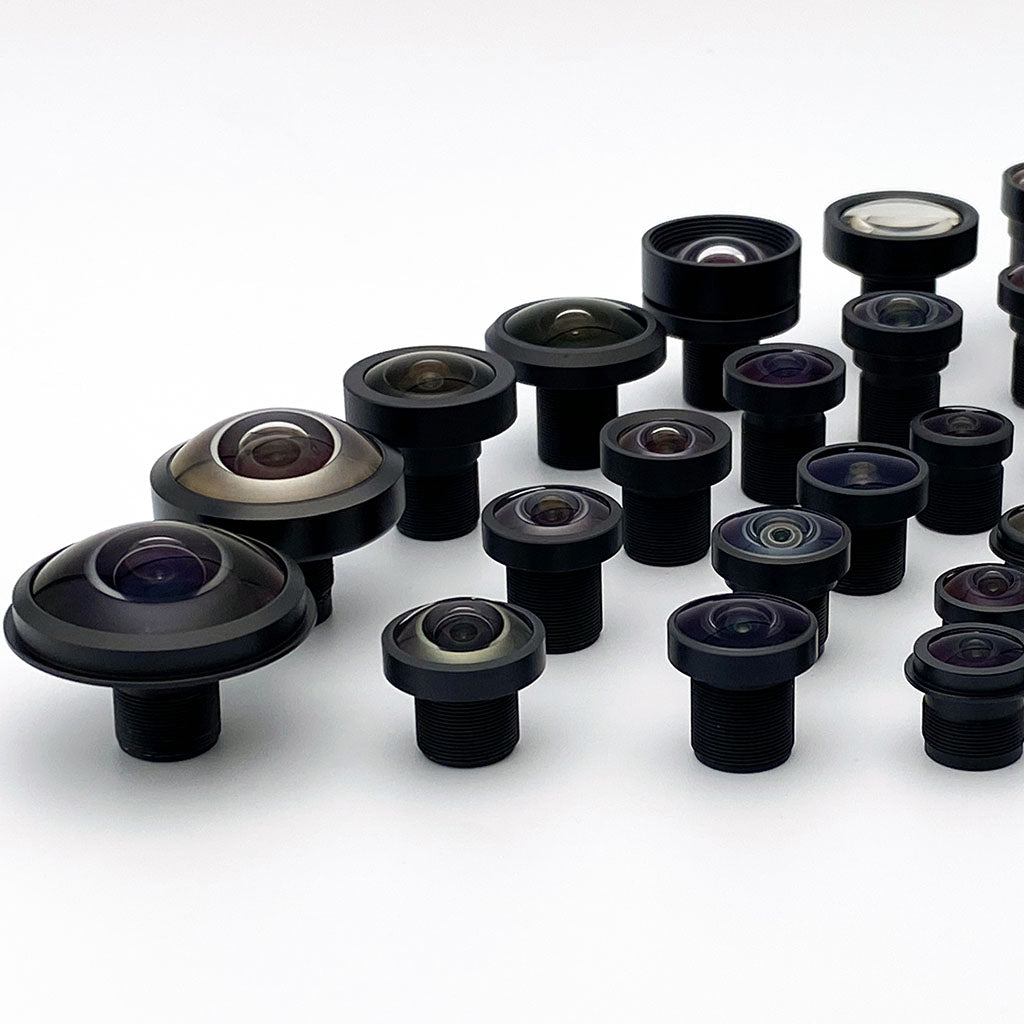
M12 Lenses are miniature lenses for embedded cameras, computer vision, and human viewing...
Image quality testing is a suite of optical measurements that validate whether your camera modules and lenses meet performance requirements for resolution, color accuracy, dynamic range, and stray light.
Our San Diego facility provides camera image quality testing services for camera modules, lenses, and imaging systems. From bench MTF testing and camera eSFR per ISO 12233 to colorimetry and dynamic range measurement, our in-house equipment delivers traceable results with full documentation. Customers are welcome to visit our facility to observe testing in progress.

Our San Diego testing lab offers camera and lens image quality testing equipment for validating optical performance. From MTF testing to colorimetry, it supports automotive, industrial, robotics, and machine vision applications.
Modulation Transfer Function measurement using Trioptics HR2 for lens resolution characterization
ISO 12233 edge Spatial Frequency Response testing for camera module spatial frequency response
Signal-to-noise ratio and dynamic range per ISO 15739 for single-exposure and HDR systems
Veiling glare and ghost image analysis using point-source and dark-world methods per ISO 9358
Color accuracy measurement using X-Rite ColorChecker, with Delta E reported alongside illuminant, geometry, and formula
AWB evaluation under D65, Illuminant A, and TL84 lighting conditions
Image quality characterization at near-infrared wavelengths for night vision and surveillance
Lateral chromatic aberration measurement across full image field using eSFR analysis
Geometric distortion characterization for wide-angle and fisheye lenses with calibration export
Our lab turns your test plan into traceable results, from first consultation to final report. Whether you need MTF testing, colorimetry, or dynamic range evaluation, we document every measurement.
Define test standards, acceptance criteria, and sample quantities with our engineering team. Specify MTF requirements, ΔE thresholds, or dynamic range targets.
Initial image quality characterization establishes a performance baseline: MTF curves, color accuracy, and distortion maps.
Samples undergo specified image quality tests, including resolution, colorimetry, dynamic range, or stray light, with calibrated equipment.
Test report with MTF curves, ΔE values, SNR data, and pass/fail analysis. Raw data export available for customer systems.
Image quality testing is a paid contract service. Pricing is customized based on your specific requirements:
Quotes are itemized with clear pricing and no hidden fees. You are welcome to tour the facility and discuss your project in person.
Get a Custom QuoteWe measure lens MTF (Modulation Transfer Function) on our Trioptics HR2 bench, which provides high-accuracy MTF data at on-axis and off-axis field positions across multiple spatial frequencies. For complete camera systems, we measure resolution using the slanted-edge method per ISO 12233. ISO 12233 defines camera resolution and SFR measurement procedures, so it scopes the camera work only; the lens-only bench MTF is a separate measurement made to the Trioptics protocol, and the two results are not interchangeable.
For camera modules, we perform eSFR (edge Spatial Frequency Response) testing using standardized test charts. This measures the system's spatial frequency response and lateral chromatic aberration across the full image field. It is a response measurement, not a sharpness score: perceived sharpness also depends on tone mapping, edge overshoot, noise, and viewing conditions, so we report the SFR curve with the capture settings that produced it.
| Test | Equipment / Method |
|---|---|
| Lens MTF (lens only) | Trioptics HR2 bench |
| Camera Module eSFR | ISO 12233 chart, slanted-edge method |
| Field Positions | Center, 0.7 field, corner |
| Standards (camera eSFR) | ISO 12233, IEEE P1858 |
Stray light degrades image contrast and can cause visible artifacts in high-dynamic-range scenes. We characterize both veiling glare (overall contrast reduction) and ghost images using point-source and extended-source methods.
Our dark-world transmissive test setup measures flare contribution from bright sources at various angles. Point-source testing identifies specific ghost positions and intensities from internal reflections.
| Test | Method |
|---|---|
| Veiling Glare | Transmissive dark-world setup |
| Ghost Imaging | Point-source angular sweep |
| Test Angles | On-axis through edge of field |
| Output | Ghost position, intensity map |

Color accuracy testing uses standardized color checker charts to measure color reproduction fidelity. We quantify color errors in CIE Lab color space and evaluate white balance accuracy under different illuminant conditions.
A chart and a Delta E number are not a method on their own. Every result we issue carries the reference values used for the chart patches, the illuminant and its calibration, the chart and camera geometry, the exposure and flare conditions, whether the capture was raw or processed, the working color space and white point, and which Delta E formula was applied. Change any of those and the number changes.
Dynamic range testing characterizes the usable signal range from noise floor to saturation. We can evaluate both single-exposure dynamic range and HDR (high dynamic range) performance for cameras with multiple exposure modes.
| Test | Method |
|---|---|
| Color Accuracy | X-Rite ColorChecker, ΔE measurement |
| White Balance | D65, A, TL84 illuminants |
| Dynamic Range | Stepped density target |
| Illumination | VIS, 850nm, 940nm sources |

Our San Diego testing lab houses specialized optical metrology equipment including MTF measurement systems, colorimetry setups, and stray light test benches. Schedule a tour to see our capabilities firsthand.
Optical bench: MTF measurement
ISO 12233 resolution testing
Color accuracy reference charts
Stepped density target testing
Ghost and flare analysis testing
Calibrated daylight illuminant
Near-infrared testing
Covert NIR camera testing
Tungsten white balance testing
Fluorescent lighting testing
Image quality analysis
Geometric calibration targets
Want to see our equipment in action?
Discuss Your RequirementsTesting performed to international and industry-specific standards with full documentation.
Our lab offers transparent pricing, specialized camera and lens expertise, and image quality test capabilities including MTF testing and colorimetry.
Schedule a tour to see our MTF measurement systems, colorimetry equipment, and stray light test benches in action. We welcome customers to our lab to observe testing and build confidence in our capabilities.
Our lab specializes in cameras and lenses, including M12 lenses, with MTF, resolution, and image quality verification. Deep optical engineering expertise helps you interpret results correctly for your application.
Test reports from our lab with documented procedures, calibrated equipment certificates, and traceable results per your required standards.
Custom quotes from our lab based on your requirements. Clear pricing with no hidden fees. Know exactly what you're paying for.
Common questions about our services including MTF testing, colorimetry, dynamic range measurement, and other image quality tests for cameras and lenses.
MTF (Modulation Transfer Function) testing quantifies how well a lens or camera system reproduces contrast at different spatial frequencies. Higher MTF at a given spatial frequency and field position means better contrast reproduction of that detail; comparing sharpness requires the full MTF curve across the field.
MTF is one input to task performance rather than a predictor of it: whether a barcode decodes or a detector fires at range also depends on sampling and aliasing, SNR, exposure and motion, distortion, the processing chain, and the target's own contrast. We measure lens MTF on our Trioptics HR2 bench, which is a lens-only measurement, and complete camera systems using the slanted-edge (eSFR) method per ISO 12233, providing data at multiple field positions from center to corner, under photopic and 850nm NIR illumination.
MTF testing typically refers to lens-only measurements using specialized optical equipment like our Trioptics HR2, where the lens is tested in isolation without a sensor. eSFR (edge Spatial Frequency Response) testing per ISO 12233:2017 measures the complete camera system including lens, sensor, and image processing. The two are related but not interchangeable.
Sharpening in the ISP produces edge overshoot that can drive the measured SFR above unity, which no optical MTF can do, so an SFR figure only means something alongside the capture state (raw or processed, sharpening and noise reduction settings) and the edge-analysis parameters used to compute it.
We measure color accuracy using X-Rite ColorChecker charts and calculate Delta E (ΔE) using the CIEDE2000 formula in CIE Lab color space. The familiar numbers, ΔE 1 as a just-noticeable difference and ΔE below 3 as consumer-acceptable, are rules of thumb rather than thresholds: perceptibility depends on which ΔE formula was used, where the color sits in the space, the viewing or display conditions, and the size of the patch.
A medical or color-sorting application sets its tolerance from the task or the applicable standard, not from a general figure. A ΔE result also means little without the reference values, illuminant, geometry, capture state, and formula reported beside it. We test under multiple illuminants (D65, A, TL84) to characterize AWB performance across lighting conditions.
Stray light results from unwanted reflections between lens surfaces, reflections off the sensor back through the lens, and scattering from optical coatings or barrel surfaces. Ghost images specifically occur when bright light sources create secondary reflections that form focused or semi-focused images on the sensor. For automotive cameras, this is critical because sun angles throughout the day can create ghosts that obscure pedestrians or road signs. We characterize both veiling glare (contrast loss) and discrete ghost positions per ISO 9358.
Yes, for surveillance, driver monitoring, and night vision applications, we provide complete image quality characterization at 850nm and 940nm wavelengths. This includes MTF/resolution testing, dynamic range measurement, and sensitivity evaluation under NIR illumination. Many cameras optimized for visible light perform differently at NIR due to lens chromatic focus shift and sensor spectral response variations. NIR testing is essential for systems that must operate in both day and night conditions.
Sample quantities depend on your test plan and statistical requirements. For development testing, 3–5 samples per test condition is typical. For qualification to automotive or military standards, sample sizes are specified by the applicable standard. We can advise on sample planning during the requirements review phase. Keep in mind that image quality testing is generally non-destructive, so samples can be returned after testing for further use.
Our lab offers MTF testing, colorimetry, dynamic range measurement, and image quality testing as a paid service. Contact our engineering team to discuss your project at our San Diego facility.