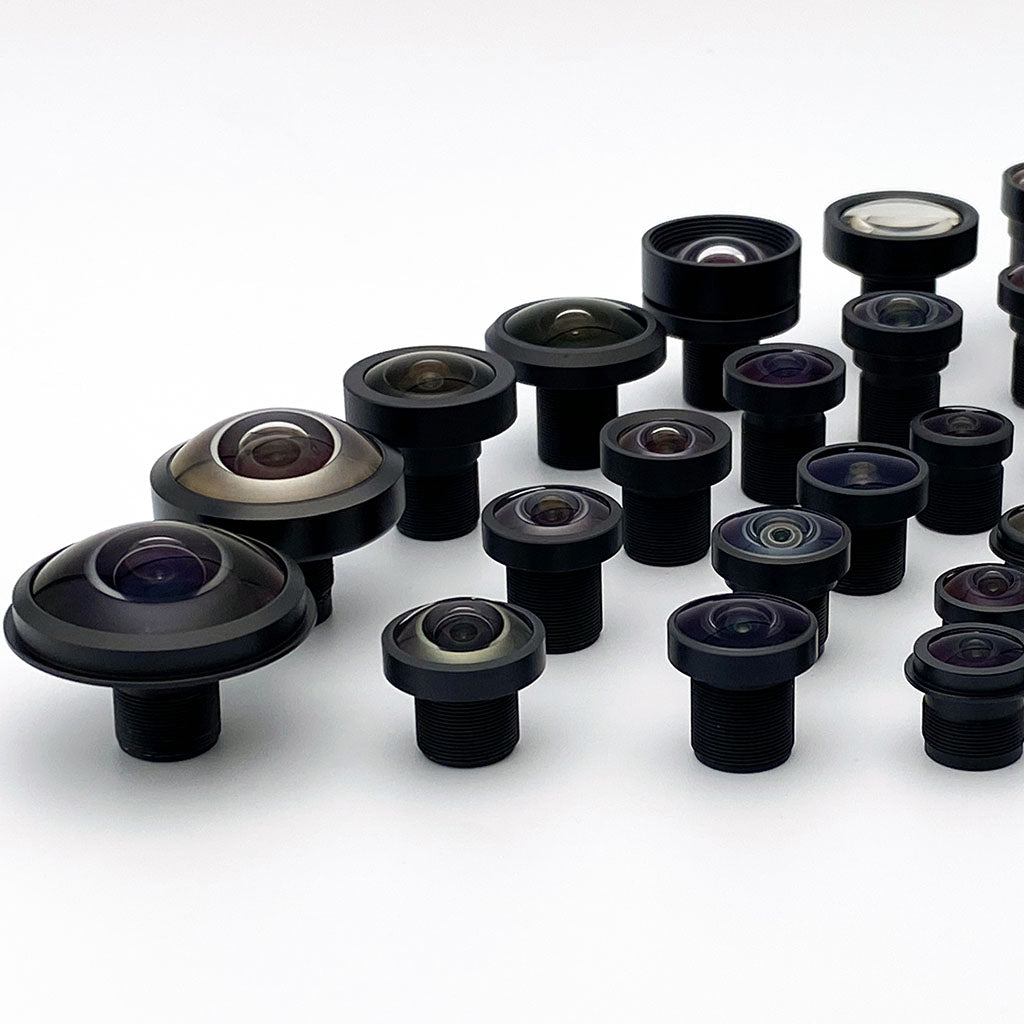

M12 Lenses for Raspberry Pi HQ (IMX477)
The Raspberry Pi High Quality Camera ships in two versions: a C/CS-mount board with a C-mount adapter in the box, and a native M12-mount board. On the C/CS version an M12 lens needs one more part, an M12-to-CS adapter.
Raspberry Pi has sold the native M12-mount HQ Camera since January 2023 alongside the C/CS-mount version. The lenses below thread into the M12 board’s holder or an M12-to-CS adapter. Before ordering, see the product page image circle against the IMX477 7.86mm diagonal: a few picks here earn their place through projection rather than full-diagonal coverage. For field of view on this exact sensor, read the IMX477 sensor reference, or browse the full M12 lens catalog.

M12 Lenses for the Raspberry Pi HQ Camera
Every product page publishes its own image circle. To fill the IMX477 corner to corner you want that figure at 7.86mm or larger, which is the diagonal of the sensor’s active area. Check which figure the page is quoting, the as-designed circle or the mechanical maximum, because the two describe different corner behavior. Read it per product rather than assuming it across the grid, because the fisheye in this collection is here for its projection and not for full-diagonal coverage. Sold-out designs are hidden; contact engineering for restock dates.
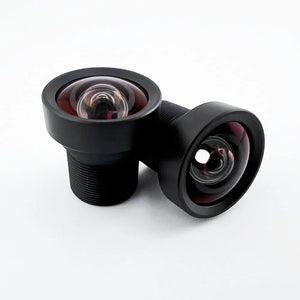
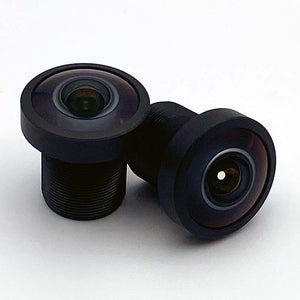
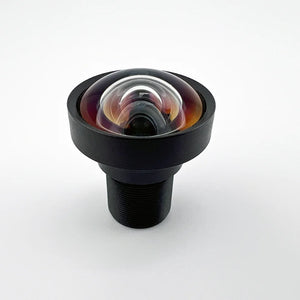
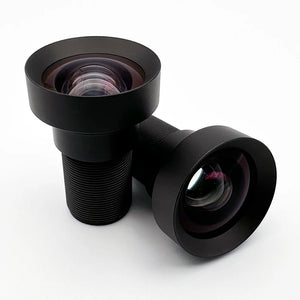
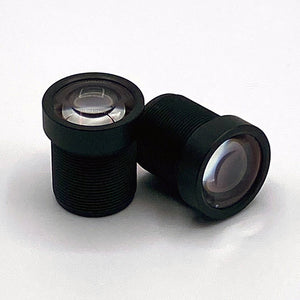
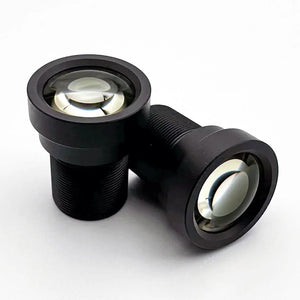
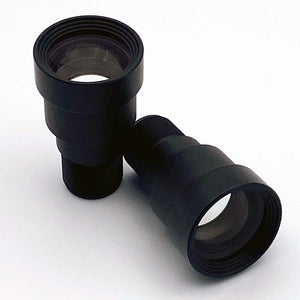
The HQ Camera Comes in C/CS-Mount and Native M12 Versions
The Raspberry Pi High Quality Camera comes in two official versions: a C/CS-mount board that ships with a C-mount adapter in the box, and a native M12-mount board that Raspberry Pi has sold since January 2023. The C/CS version covers C-mount and CS-mount lenses out of the box; the M12 version accepts M12 lenses directly.
To run an M12 lens on the C/CS-mount board, add an M12-to-CS adapter. It threads into the CS-mount bore and presents an internal M12x0.5 thread. Ours carries a focus lock ring, which is what holds the lens position once you have focus, with no tape or adhesive in the stack.
The adapter adds mechanical spacing between the lens shoulder and the sensor. This adds axial separation and optical path through air. Optical path length is the integral of refractive index along the ray; air contributes because its index is close to one. Check the lens mechanical back focal length against the combined depth before ordering, or the lens will run out of thread before the image comes into focus.
One part to keep straight: the 5mm C-to-CS spacer that ships with the HQ camera is not an M12 adapter. The spacer only restores C-mount registration on a CS-mount body. Different part, different job.
Holders, lock rings, and spacers for board cameras live in board lens accessories. If you are building around the native M12-mount HQ Camera instead, you skip the adapter and thread the lens straight into its holder.
How to Check Image Circle Against the IMX477
The IMX477 is a Sony 1/2.3" rolling shutter sensor: 4056 × 3040 pixels at 1.55µm pitch, active area 6.29mm × 4.71mm. For lens selection the number that matters is the active-area diagonal, 7.86mm. Falling short of it is a falloff rather than a wall: relative illumination and corner contrast drop away gradually, and only the mechanical edge of the cone cuts hard.
That is why the two published figures answer different questions. The as-designed image circle is the diameter over which the design holds its intended MTF and relative illumination. The maximum is the largest diameter the barrel passes, out where illumination and corner contrast have already fallen off without being mechanically clipped. Several M12 designs publish both, and the two can straddle 7.86mm. When they do, tell us whether your corners carry measurement, detection, or context, and we will say which figure applies before you order.
Published Image Circle by Lens in This Collection
| Lens | Focal Length | Published Image Circle | Covers 7.86mm |
|---|---|---|---|
| CIL227 | 185° fisheye | 7.8mm as designed | No, chosen for its projection |
| CIL034 | Wide angle, figure on the product page | 7.8mm as designed, 8.2mm maximum | Check the product page figure |
| CIL042 | 4.2mm | 8.8mm as designed | Yes |
| CIL059 | 5.9mm | 9.0mm as designed | Yes |
| CIL122 | 12mm, IR corrected | 9.3mm | Yes |
| CIL160 | 16mm telephoto | 8.8mm as designed | Yes |
| CIL250 | 25mm telephoto, IR corrected | 9.4mm | Yes |
| CIL350 | 35mm telephoto | 11mm | Yes |
The CIL227 fisheye and the CIL034 wide-angle are the two rows to read carefully. A fisheye is specified by its projection, so 7.8mm as designed is the intended figure rather than a shortfall, and CIL034 publishes an as-designed circle just under the diagonal with a larger maximum above it. For either one, see the product page image circle against the IMX477 7.86mm diagonal and tell us the corner performance you need.
The grid above is the live collection, and the wider catalog sits in machine vision lenses. For horizontal, vertical, and diagonal field of view calculated on the IMX477 active area, the IMX477 sensor page lists it per lens, so you do not have to run the geometry yourself. To size a lens from scene width and working distance instead, use the FOV calculator.
Focusing an M12 Lens on the HQ Camera
M12 lenses have no focus barrel. You focus by threading the lens in and out of its holder. How close you can focus on the HQ camera comes down to the lens prescription, the holder height and thread engagement, clearance over the sensor stack, and the edge sharpness your shot needs, so run your build past Commonlands engineering if the near limit matters. That is why the lock ring earns its place. Once your target distance is sharp, the ring clamps the thread so handling and shipping do not walk it back out.
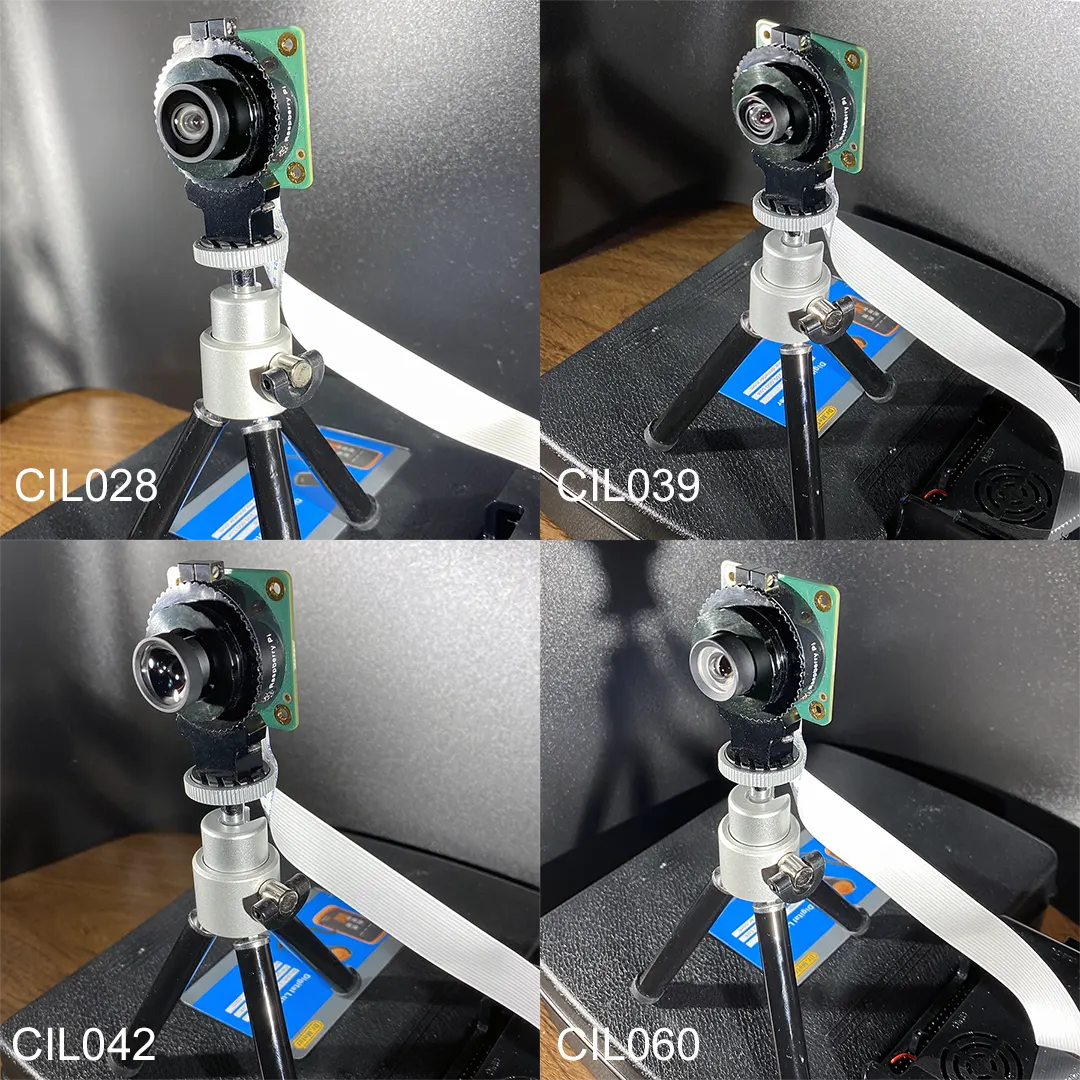
Max built this rig in 2020 and photographed the field of view from three M12 lenses side by side on an HQ camera. The write-up covers camera placement, the out-of-spec adapter threads he hit buying cheap parts, and the focus procedure: M12 lenses for a Raspberry Pi HQ video conferencing camera.
Raspberry Pi Lens Resources

M12 Lenses on the Raspberry Pi HQ Camera: The Build
Side-by-side field of view frames from three M12 lenses, camera placement, adapter quality problems, and a four-step procedure for setting and locking focus.
Read the write-upIf you have not settled on M12 yet, start with the mount-by-mount HQ camera lens guide, which walks through CS-mount, C-mount, and M12 on the HQ camera and where each one makes sense.
Frequently Asked Questions About M12 Lenses on the Raspberry Pi HQ Camera
Technical answers from our optical engineering team
Does the Raspberry Pi HQ camera take M12 lenses?
Yes. The HQ Camera ships in two official versions: a C/CS-mount board that includes a C-mount adapter, and a native M12-mount board sold since January 2023. On the M12 version the lens threads straight into the holder. On the C/CS version, add an M12-to-CS adapter that threads into the CS bore.
What image circle does an M12 lens need for the IMX477?
At least 7.86mm to fill the frame corner to corner. That is the diagonal of the IMX477 active area, 6.29mm by 4.71mm at 4056 by 3040 pixels. A smaller image circle does not switch the corners off; relative illumination and corner contrast roll away, and only the mechanical edge of the cone clips. Where a product page lists an as-designed circle and a larger maximum, read the as-designed figure as the diameter that holds the intended MTF and illumination and the maximum as the largest diameter the barrel passes, then compare the as-designed figure first. One exception is worth knowing: a fisheye is specified by its projection, so it can sit below that diagonal on purpose.
Will an M12 lens reach focus through a CS-mount adapter?
That depends on the lens mechanical back focal length. The adapter adds mechanical spacing between the lens and the sensor, so a lens with a short back focal length can run out of thread before the image is sharp. Check the published back focal length against the adapter depth, or send us the pair and we will check it for you.
What field of view will I get on the IMX477?
It changes with focal length, so read it off the IMX477 sensor page rather than converting a field of view written for another sensor format. That page lists horizontal, vertical, and diagonal field of view calculated on the 6.29mm by 4.71mm active area for each Commonlands lens.
Do I need the focus lock ring?
If the camera moves, yes. An M12 lens holds focus by thread position alone, so vibration or a knock can walk it out of focus. The Commonlands M12-to-CS adapter includes a lock ring that clamps the thread once your target distance is sharp. No tape, no adhesive.
Tell Us Your Board and Working Distance
Send the camera board you are building on and how far it sits from the subject. US-based optical engineers will confirm image-circle fit on the IMX477 and check the adapter stack depth against the lens back focal length. 100% of lenses MTF-tested before shipping: volume production on dedicated production MTF stations, precision and reference testing on a Trioptics ImageMaster HR2.